
Recognizing changes in memory, behavior, or cognitive function can be overwhelming for older adults and their families. At McCrite Plaza Senior Living, we understand how important it is to know what’s happening and what steps to take next. One of the most common questions families ask is: How do doctors diagnose dementia, Alzheimer’s disease, or other memory-related conditions?
The diagnostic process is more comprehensive—and more reassuring—than many people realize. Here is an easy-to-understand guide to how medical professionals pinpoint the cause of memory changes and determine the right level of support and care.
1. A Thorough Medical History Sets the Stage

The first step in diagnosing dementia or Alzheimer’s begins with understanding the individual’s background. Doctors typically ask about:
-
When symptoms started
-
How quickly changes occurred
-
Family history of dementia or neurological conditions
-
Current medications and supplements
-
Past medical issues that could affect memory, such as stroke, depression, or thyroid problems
Because conditions like dehydration, medication interactions, or vitamin deficiencies can mimic dementia, a medical history gives clinicians clues to rule out reversible causes.
2. Cognitive and Neuropsychological Tests
To evaluate thinking skills, healthcare providers use structured tests that measure:
-
Short-term and long-term memory
-
Problem-solving
-
Language and communication
-
Attention and focus
-
Ability to follow instructions
-
Visual-spatial reasoning
Common tools include the Mini-Mental State Examination (MMSE) and the Montreal Cognitive Assessment (MoCA). These scores help determine whether the changes align with mild cognitive impairment (MCI), dementia, Alzheimer’s disease, or another neurological disorder.
3. Physical and Neurological Exams
A hands-on assessment is essential. A doctor will check:
-
Reflexes
-
Muscle strength and tone
-
Eye movement
-
Coordination
-
Balance
-
Sensory responses
This exam helps identify issues such as Parkinson’s disease, stroke, or neuropathy—conditions that can also cause memory or cognitive changes.
4. Lab Tests to Rule Out Reversible Causes
Because several treatable medical problems can affect cognition, doctors perform laboratory tests such as:
-
Thyroid function tests
-
Vitamin B12 levels
-
Complete blood count (CBC)
-
Metabolic panel
-
Hormone and electrolyte levels
If a reversible issue is identified, addressing it may restore or significantly improve cognitive function.
5. Advanced Brain Imaging
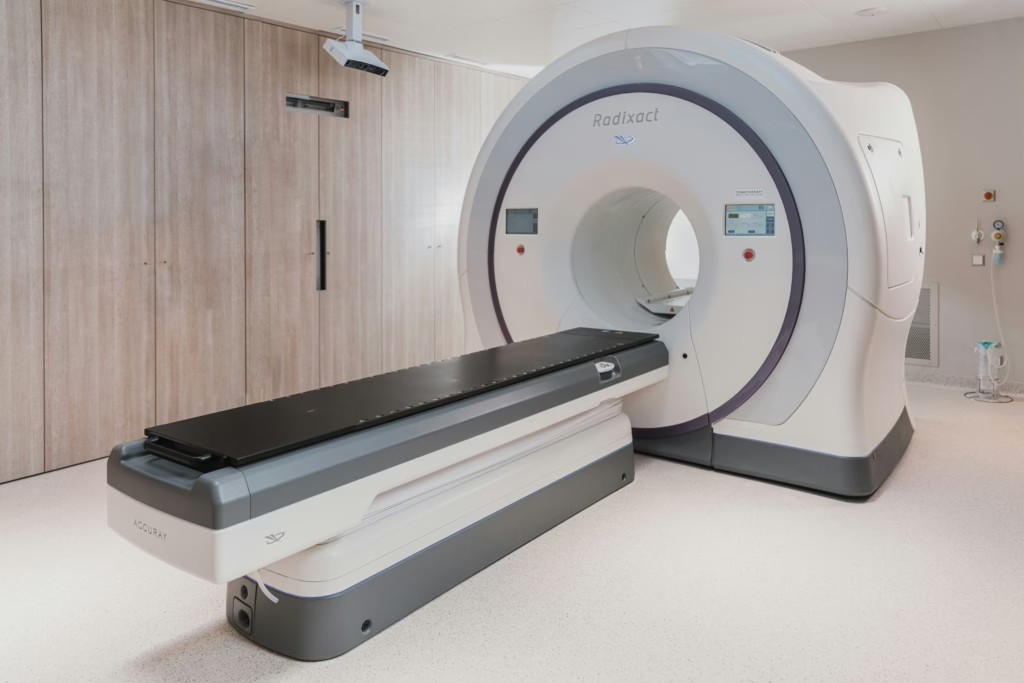
Modern imaging tools allow doctors to look inside the brain to detect abnormalities associated with dementia. These include:
CT Scan or MRI
These scans can reveal:
-
Brain shrinkage
-
Strokes or mini-strokes
-
Tumors
-
Fluid buildup
-
Structural abnormalities
MRI scans are especially valuable for diagnosing vascular dementia or ruling out other neurological problems.
PET Scan
PET scans help detect changes in brain metabolism or amyloid buildup—both associated with Alzheimer’s disease. While not used in every case, PET technology offers deeper diagnostic insight when needed.
6. Genetic Testing (When Appropriate)
Although not routine, genetic tests may be recommended if:
-
Symptoms appear before age 65
-
There is a strong family history of early-onset Alzheimer’s
-
A neurologist suspects a rare inherited disorder
Genetic counseling accompanies this type of testing to help families understand the results and implications.
7. Monitoring Changes Over Time
Diagnosing memory conditions is rarely a one-day event. Doctors often track cognitive changes over months or years to see how fast symptoms progress. This timeline helps them differentiate between Alzheimer’s disease, other types of dementia, or mild cognitive impairment.
Why Early Diagnosis Matters

Receiving a clear diagnosis allows families to:
-
Create a proactive care plan
-
Access medications that may slow progression
-
Reduce safety risks
-
Plan financially and legally
-
Explore supportive environments like McCrite Plaza’s Memory Care neighborhoods
-
Improve overall quality of life
Early awareness also gives individuals time to participate in their own care decisions.
Compassionate Memory Care at McCrite Plaza

At McCrite Plaza Senior Living—serving Kansas City at Briarcliff and Topeka—we are committed to supporting families through every stage of the memory care journey. Our specialized, secure environments focus on:
-
Personalized daily routines
-
Activities that stimulate cognitive function
-
Consistent, compassionate staff
-
Safe and comfortable surroundings
-
Family collaboration and communication
Whether you have early concerns or are seeking full-time memory support, our team is here to help you navigate the next steps with confidence.
McCrite Plaza Senior Living at Briarcliff in Kansas City (816-888-7930) welcomes you to schedule a tour, ask questions, and see how compassionate, cutting-edge memory care can support your entire family.
Contact Us
See Firsthand What It’s Like! Join The McCrite Plaza Social Club Today!